


Men’s hats have shaped personal style for centuries, making statements far beyond just blocking the sun. Surprisingly, the top hat once symbolized the absolute height of aristocratic power and even shifted Western social codes. That same headwear that crowned the elite now shares the spotlight with snapbacks and street caps, proving hats remain the boldest way to express identity across cultures and eras.
Table of Contents
- What Are The Different Types Of Men’s Hats?
- Why Are Men’s Hats Important In Fashion And Identity?
- How Men’s Hats Reflect Cultural Trends And Movements
- Exploring Materials And Styles In Men’s Hats
- The Role Of Limited-Edition Men’s Hats In Collecting
Quick Summary
| Takeaway | Explanation |
|---|---|
| Hats convey social status and identity. | Different types of hats historically symbolize social class, profession, and cultural heritage, making them powerful identity markers. |
| Limited-edition hats are collectible cultural artifacts. | Scarcity and unique design narratives drive interest, making these hats valuable investments that reflect cultural moments. |
| Hats serve as personal branding tools. | In contemporary fashion, hats help individuals curate their style and express personal narratives through visual communication. |
| Material choices influence hat significance. | The materials used impact a hat’s durability, aesthetic appeal, and cultural context, shaping its overall significance in fashion. |
| Hats reflect cultural narratives and movements. | Hats have evolved through various social movements, embodying political statements and emerging cultural identities across different eras. |
What are the Different Types of Men’s Hats?
Men’s hats represent far more than simple head coverings. Throughout history, they have been powerful symbols of social status, profession, cultural identity, and personal style. Understanding the different kinds of men’s hats reveals a fascinating landscape of fashion and function.
Classic Formal Hat Styles
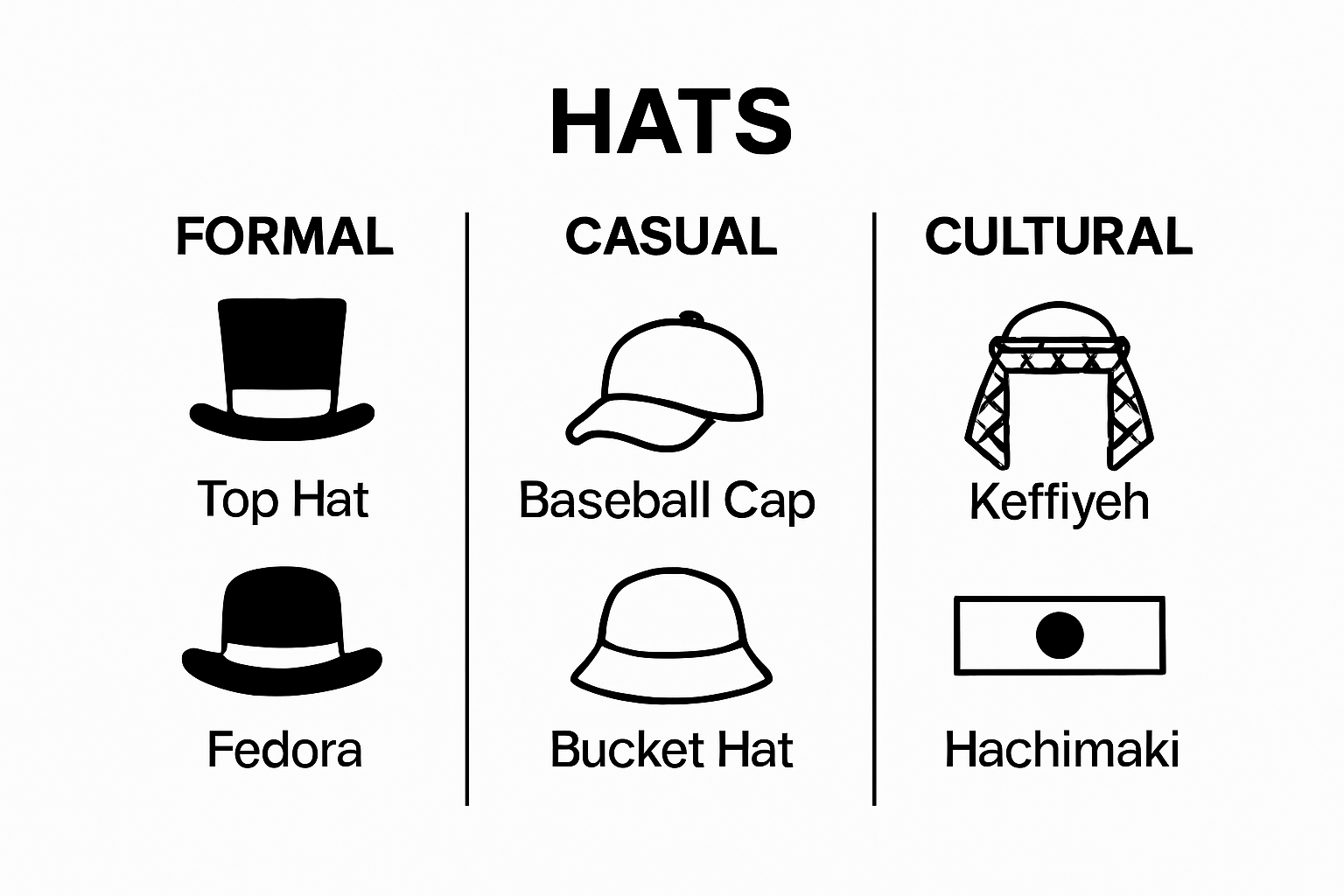
Formal hat styles have deep roots in Western fashion and social conventions. The top hat, emerging in the late 18th century, symbolized aristocratic elegance and was a staple of upper-class men’s attire. According to Britannica, this silk-crafted headpiece represented peak social sophistication.
Other prominent formal styles include:
- Bowler Hat: A rounded, hard-felt hat with a short curved brim
- Homburg: A semi-formal felt hat with a center crease and folded brim
- Fedora: A soft felt hat with a wide brim and indented crown
Casual and Functional Hat Types
Casual men’s hats offer versatility and practical protection. Baseball caps, originally designed for athletes, have transformed into a ubiquitous streetwear accessory. The Smithsonian National Museum of American History notes how sports-inspired headwear has become a fundamental element of contemporary men’s fashion.
Popular casual hat styles encompass:
- Newsboy Cap: A soft, round cap with a small, stiff brim
- Bucket Hat: A casual, wide-brimmed hat originally used by fishermen
- Trucker Hat: A mesh-backed cap with a structured front panel
Cultural and Regional Hat Variations
Different cultures worldwide have unique hat traditions that reflect local heritage, climate, and social practices. From the traditional Arabic keffiyeh to the Japanese hachimaki, these headwear pieces communicate complex cultural narratives beyond mere fashion statements.
Understanding different kinds of men’s hats means recognizing them as intricate cultural artifacts that blend practicality, personal expression, and historical significance.
Below is a table comparing major types of men’s hats, highlighting their key features, typical materials, and cultural or historical significance.
| Hat Type | Key Features | Typical Materials | Cultural/Historical Significance |
|---|---|---|---|
| Top Hat | Tall crown, flat brim | Silk, wool felt | Symbol of aristocracy and formal elegance |
| Bowler Hat | Rounded hard crown, short curved brim | Hard felt | Popular in British middle-class tradition |
| Fedora | Wide brim, indented crown | Soft felt | Retro style, now a fashion staple |
| Homburg | Center crease, rolled brim | Felt | Semi-formal, associated with politicians |
| Baseball Cap | Rounded crown, stiff bill | Cotton, polyester | Sports origins, now everyday/casual wear |
| Bucket Hat | Wide, downward sloping brim | Cotton, canvas | Functional, used in outdoor & streetwear fashion |
| Newsboy Cap | Rounded, panelled, buttoned top | Wool, tweed | Early 20th-century working class accessory |
| Trucker Hat | Mesh back, foam front, adjustable snapback | Polyester, foam, mesh | Popular in streetwear and pop culture |
| Keffiyeh/Hachimaki | Head wrap/band, cultural design | Cotton, varied fabrics | Reflects Arabic/Japanese heritage and identity |
Why Are Men’s Hats Important in Fashion and Identity?
Hats transcend mere functional accessories. They serve as powerful personal statements that communicate complex social narratives, cultural affiliations, and individual expressions of style. Understanding their significance reveals how headwear functions as a nuanced language of identity.
Social Signaling and Status Representation
Historically, men’s hats have been profound indicators of social standing and professional identity. A specific hat could instantly communicate a person’s economic class, occupation, and cultural background.
According to Smithsonian Magazine, even contemporary accessories like baseball caps operate as “battle flags” signaling personal allegiances and group memberships.
Key social signaling functions include:
- Representing professional roles (like military or law enforcement caps)
- Indicating cultural heritage and regional identity
- Communicating personal aesthetic preferences
Psychological and Cultural Significance
Men’s hats function as psychological armor, providing wearers with a sense of confidence and belonging. They are not just fabric and form, but complex symbols that help individuals navigate social landscapes. A well-chosen hat can transform personal presentation, offering a subtle yet powerful mechanism of self-expression.
Cultural dimensions of hat wearing demonstrate profound psychological impacts:
- Enhancing personal confidence
- Creating a sense of group membership
- Facilitating non-verbal communication
Fashion and Personal Branding
In contemporary urban fashion, hats have evolved into critical elements of personal branding. Street style, subcultures, and fashion movements frequently use headwear as a primary means of visual communication. From snapback caps in hip-hop culture to fedoras in vintage-inspired looks, hats allow men to curate and broadcast their unique personal narrative.
Ultimately, men’s hats represent far more than fabric shaped around the head. They are intricate cultural artifacts that blend personal identity, social communication, and aesthetic expression into a single, powerful accessory.
How Men’s Hats Reflect Cultural Trends and Movements
Hats are more than fashion accessories. They are powerful cultural artifacts that capture the spirit of social movements, political shifts, and emerging identities. By examining how headwear transforms across different eras, we can understand the profound ways clothing communicates complex social narratives.
Political and Revolutionary Symbolism
Political movements have long used hats as visual manifestos of resistance and solidarity. According to the National Museum of African American History and Culture, the black beret became an iconic symbol of the Black Panther Party during the 1960s civil rights movement, representing both militant resistance and cultural pride.
Hats that embody political statements often include:
- Revolutionary berets signaling ideological commitments
- Protest movement caps representing collective identity
- Political campaign hats communicating electoral support
Subcultural Identity and Style Movements
Subcultures have consistently used headwear to define boundaries and express collective identity. Hip hop culture transformed the simple baseball cap from athletic gear into a powerful style statement. Streetwear movements turned hats into canvases for personal and group expression, allowing individuals to signal their aesthetic allegiances.
Key subcultural hat expressions include:
- Kangol hats in early hip hop scenes
- Snapbacks representing urban street culture
- Vintage-inspired fedoras in retro fashion movements
Global Cultural Exchange
In our interconnected world, men’s hats have become vehicles for cross-cultural dialogue. Traditional headwear like the Arabic keffiyeh or Japanese hachimaki now appear in global fashion contexts, transforming from regional symbols to international style statements. These translations demonstrate how clothing transcends geographical boundaries, creating new meanings and connections.
Modern men’s hats represent complex narratives of identity, resistance, and cultural transformation. They are living documents of social change, communicating stories far beyond their physical form.
Exploring Materials and Styles in Men’s Hats
Men’s hats represent a sophisticated interplay of material science, cultural craftsmanship, and design innovation. From traditional wool felts to contemporary performance fabrics, hat materials tell complex stories about technological advancement and aesthetic evolution.
Traditional Natural Materials
Traditional hat construction relied heavily on natural materials with exceptional properties. According to Britannica, felt production involves intricate processes of interlocking wool and fur fibers under precise heat and moisture conditions. Beaver, hare, and rabbit fur were historically prized for creating dense, water-resistant hat bodies.
Key traditional hat materials include:
- Wool felt with remarkable shape retention
- Fur-based felts offering superior insulation
- Natural straw fibers like toquilla for lightweight styles
Modern Synthetic and Performance Fabrics
Contemporary hat design has revolutionized material selection, introducing synthetic fabrics that offer enhanced performance and versatility. Performance textiles provide moisture-wicking, temperature regulation, and durability previously impossible with natural materials. Urban streetwear has particularly embraced these technological innovations, transforming hats into functional fashion statements.
Innovative modern hat materials feature:
- Polyester blends with quick-drying properties
- Mesh fabrics providing superior ventilation
- Recycled synthetic materials supporting sustainability
Craftsmanship and Material Selection
Material choice profoundly influences a hat’s structural integrity, aesthetic appeal, and cultural significance. From the intricate weaving techniques of Ecuadorian Panama hats to contemporary urban streetwear hat collections, each material tells a unique story of design philosophy and cultural expression.
Ultimately, men’s hats are more than mere accessories. They are complex artifacts where material science, cultural heritage, and personal style converge into wearable art.
This table summarizes traditional and modern materials used in men's hats, along with their key properties and areas of usage.
| Material Type | Common Materials | Key Properties | Main Usage |
|---|---|---|---|
| Traditional Natural | Wool felt, fur felt, straw | Shape retention, insulation | Classic formal hats, summer hats, heritage styles |
| Fur-based Felt | Beaver, hare, rabbit fur | Dense, water-resistant | Premium formal hats (top hats, homburgs) |
| Straw | Toquilla, other natural fibers | Lightweight, breathable | Summer hats (Panama, boater) |
| Modern Synthetic | Polyester blends, mesh, acrylic | Quick-drying, durable | Performance hats, streetwear (baseball/trucker) |
| Recycled Synthetic | Polyester from recycled fibers | Sustainable, eco-friendly | Modern eco-conscious hat collections |
The Role of Limited-Edition Men’s Hats in Collecting
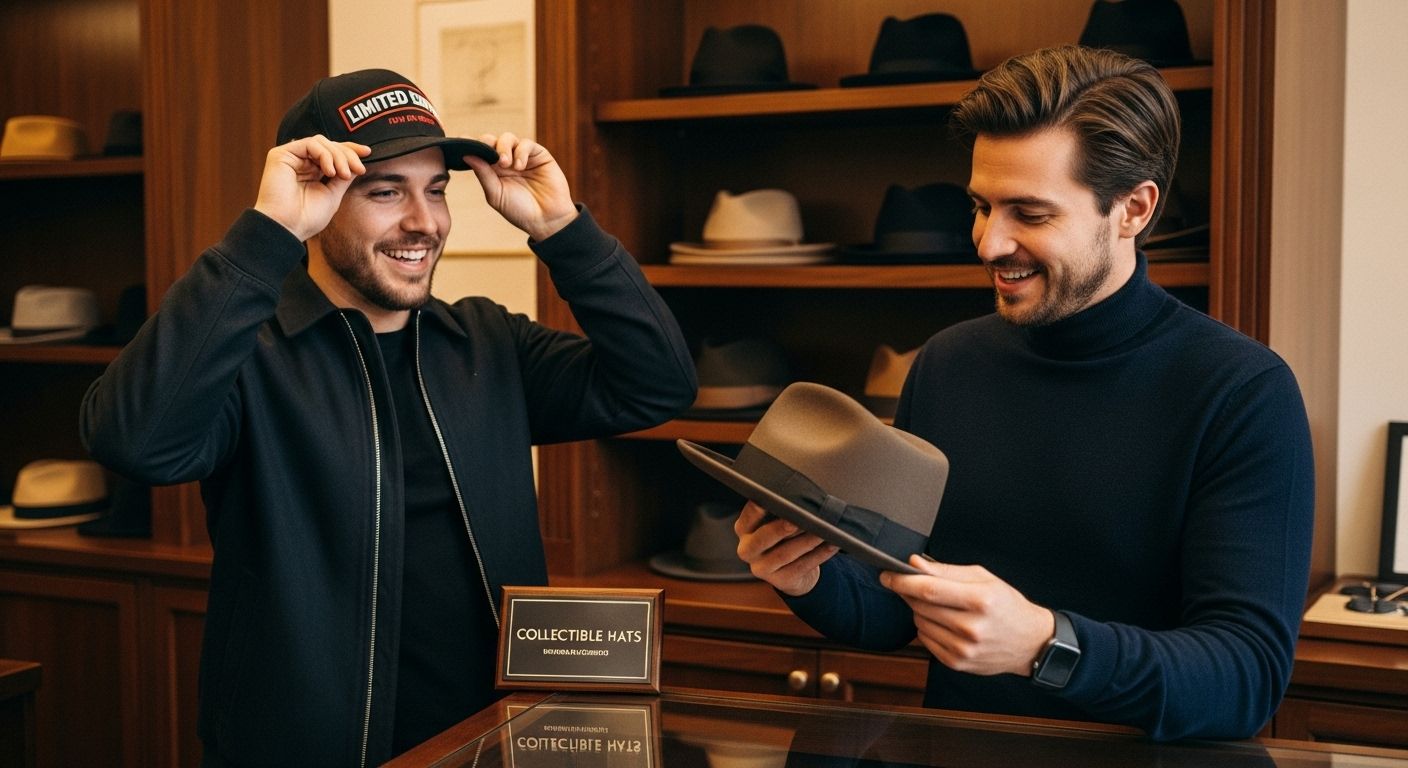
Limited-edition men’s hats represent more than fashion accessories. They are cultural artifacts that capture moments in time, embodying unique narratives of design, scarcity, and personal expression. Collectors view these pieces as wearable investments that transcend traditional fashion boundaries.
Psychological Drivers of Collectibility
The allure of limited-edition hats stems from complex psychological mechanisms. According to research in Psychology & Marketing, product scarcity significantly increases perceived value and purchase motivation. Collectors are drawn to items that represent exclusivity, social signaling, and unique cultural moments.
Key psychological factors include:
- Rarity creating perceived intrinsic value
- Social status associated with owning unique pieces
- Emotional connection to specific design narratives
Economic and Cultural Significance
Limited-edition hats function as complex economic and cultural objects. Commemorative releases, such as championship event caps, transform headwear into historical markers. Some collectors invest substantial resources in acquiring rare pieces, understanding that their value extends far beyond simple fashion statements.
Significant collecting considerations involve:
- Potential financial appreciation of rare pieces
- Documentation of cultural and design moments
- Preservation of unique craftsmanship
Preservation and Authentication
Serious hat collectors develop sophisticated strategies for preserving and authenticating limited-edition pieces. Multiversity’s vault hat collections represent prime examples of how contemporary brands create collectible narratives around headwear.
Collecting limited-edition men’s hats is ultimately an art form. These pieces represent intersections of design, cultural memory, personal identity, and creative expression—transforming simple headwear into profound cultural statements.
Elevate Your Hat Game with Streetwear Collectibles
You just explored how men’s hats carry meaning, identity, and personal style. Finding a hat that fits your cultural vibe and fashion sense can be tough. Maybe you want more than just an accessory. Maybe you seek something with a strong backstory, rare design, and real connection to street culture. The truth is, most stores offer generic options that lack depth, tradition, or the excitement of scarcity.
Explore Vault Hats and uncover statement pieces crafted for collectors and streetwear fans. Each hat is tied to a unique character and multiversal narrative, ensuring your look is one of a kind.

Set yourself apart with a piece from ALT-Style Hats or dive into our universe at Multiversity Store. Limited collections are waiting. Now is the perfect time to claim a distinctive hat that reflects your story, before someone else does.
Frequently Asked Questions
What are the main types of formal men’s hats?
The main types of formal men’s hats include the top hat, bowler hat, homburg, and fedora, each serving distinct roles in traditional formal attire.
How can I incorporate a casual hat into my everyday style?
You can incorporate casual hats, such as baseball caps or bucket hats, into your everyday style by pairing them with jeans, t-shirts, and casual footwear to achieve a laid-back look.
What cultural significance do different men’s hats carry?
Different men’s hats carry unique cultural significance, often reflecting local heritage, social status, and personal identity, such as the keffiyeh in Arabic culture or the hachimaki in Japan.
How do materials influence the style and function of men’s hats?
Materials significantly influence the style and function of men’s hats; traditional materials like wool felt offer shape retention and insulation, while modern fabrics, like synthetic blends, enhance performance and comfort.
Recommended
-
[ The Future Graff Cap – Multiversity Snapback Hat for Streetwear Fans
– MULTIVERSITY](https://multiversitystore.com/products/the-future-graff-cap)
-
[ ALT-Style Hats | Multiversity® glitch-coded apparel Streetwear
– MULTIVERSITY -
[ Vault Hats | Multiversity glitch-coded apparel Streetwear
– MULTIVERSITY -
[ Nyrah Hex Collection | Multiversity glitch-coded apparel Streetwear
– MULTIVERSITY
Enter Glitchwave
Enter Illusion Layer
Enter Rebel
Enter Algorithm Override
Enter Void Signal
Enter Fate Stack
EARLY ACCESS
Get Access Before Public Release
Join the Multiversity signal list for limited releases, Mode updates, and early access windows.